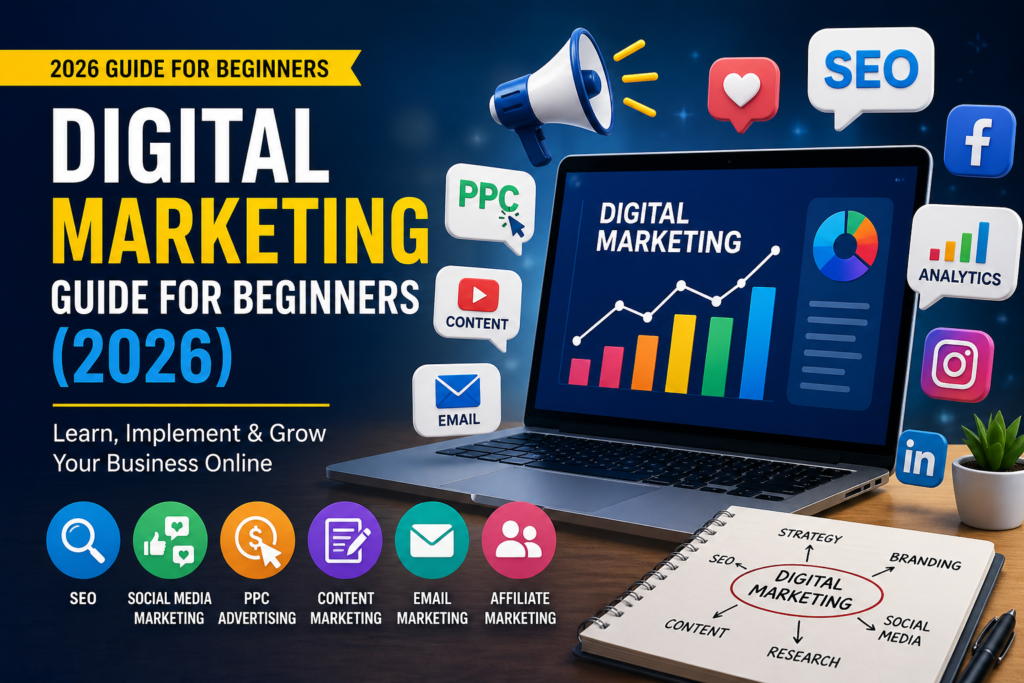
Digital marketing is the process of promoting products and services via the internet. It utilizes online platforms—such as search engines, social media websites, and email—to enable businesses to easily reach their target audience. In today’s digital era, marketing has become immensely important. It empowers businesses to reach a larger audience at a lower cost, target the right demographic, and easily track their results. Compared to traditional marketing, it is both more effective and faster. In this guide, you will learn about the fundamentals of online marketing, its key types, effective strategies, and the emerging trends for 2026, all of which will enable you to accelerate the growth of your business. online marketing for Beginners is a simple yet powerful guide designed to help you understand how the online world works and how you can use it to grow a business or personal brand. In today’s , almost every customer spends time on the internet—searching on Google, scrolling social media, or checking emails. Digital marketing allows you to reach these people at the right time with the right message. It includes various methods such as Search Engine Optimization (SEO), social media marketing, content marketing, email marketing, and paid advertising.
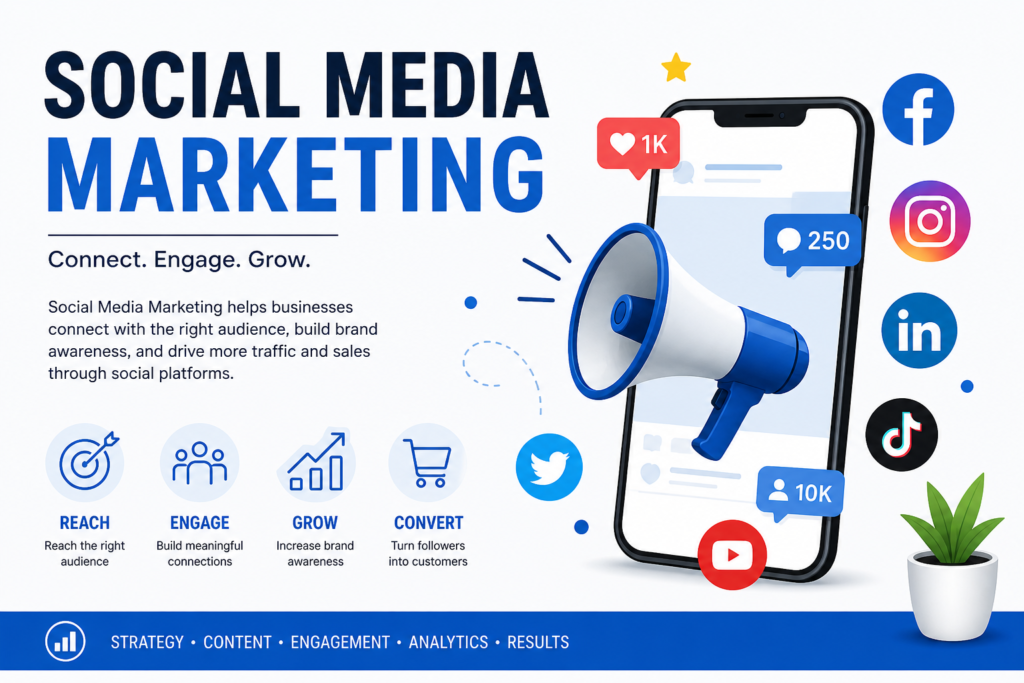
For beginners, organic marketing might seem confusing at first, but it becomes easy when you learn it step by step. SEO helps your website rank higher on search engines, bringing free traffic. Social media marketing allows you to connect with your audience on platforms like Instagram, Facebook, and LinkedIn. Paid ads, such as Google Ads or Meta Ads, help you reach a targeted audience quickly and generate leads or sales. Content marketing focuses on creating valuable blogs, videos, or posts that attract and engage users. One of the biggest advantages of digital marketing is that it is cost-effective compared to traditional marketing. You don’t need a huge budget to get started; even small businesses or individuals can grow using smart strategies. Another key benefit is measurability—you can track your performance using tools and see what’s working and what needs improvement. This beginner-friendly guide will help you understand the basics, explore different types of digital marketing, and learn how to create simple strategies to start your journey. With consistency and the right approach, you can build a strong online presence, attract the right audience, and achieve your business goals. Whether you want to become a online marketer, freelancer, or business owner, this guide will give you the foundation you need to succeed in 2026 and beyond. Social Media Marketing helps businesses connect with their target audience through platforms like Facebook, Instagram, LinkedIn, and Twitter. It allows brands to build awareness, engage with users, and promote products or services effectively. By creating valuable content, posting regularly, and interacting with followers, businesses can increase trust and visibility. Social media marketing also supports paid advertising, helping you reach the right audience quickly. With proper strategy and analytics, you can track performance and improve results. Overall, it is a powerful and cost-effective way to grow your brand, generate leads, and boost sales online.
What is Digital Marketing
https://blog.mayurdigitalofficial.com/
Difference between traditional vs digital marketing
Examples (social media ads, Google search, emails, etc.)
Types of Digital Marketing
Search Engine Optimization (SEO)
On-page SEO
Off-page SEO
Technical SEO
3.2 Social Media Marketing (SMM)
Platforms: Facebook, Instagram, LinkedIn
Content strategy
3.3 Pay-Per-Click Advertising (PPC)
Google Ads
Meta Ads
3.4 Content Marketing
Blogs
Videos
Infographics
3.5 Email Marketing
Lead nurturing
Campaign strategy
3.6 Affiliate Marketing
How it works
Commission-based model
Benefits of online Marketing
Cost-effective
Global reach
Targeted audience
Measurable result
Key Digital Marketing Tools
SEO tools (Ahrefs, SEMrush)
Analytics tools (Google Analytics)
Social media tools
Email tools
Digital Marketing Strategy
Define goals
Identify target audience
Choose platforms
Create content
Run campaigns
Analyze and optimize
Latest Trends in Digital Marketing (2026)
AI in marketing
Voice search
Short-form video content
Influencer marketing
Common Mistakes to Avoid
Not targeting the right audience
Ignoring SEO
Poor content quality
Not tracking performance
Future of Digital Marketing
Automation growth
Personalization
Data-driven decisions
Conclusion